Rib frame for needle decompression and finger thoracostomy
Needle decompression, finger thoracostomy · CC BY-NC-SA 4.0 · Original design for this repository
Three-part press-fit frame: two rails and three elliptical rib bars. The space under the ribs stays open, so a needle or finger that clears the chest wall correctly passes into free air, the "pleural space." Cover the frame with foam, gelatin, or pork belly as the chest wall.
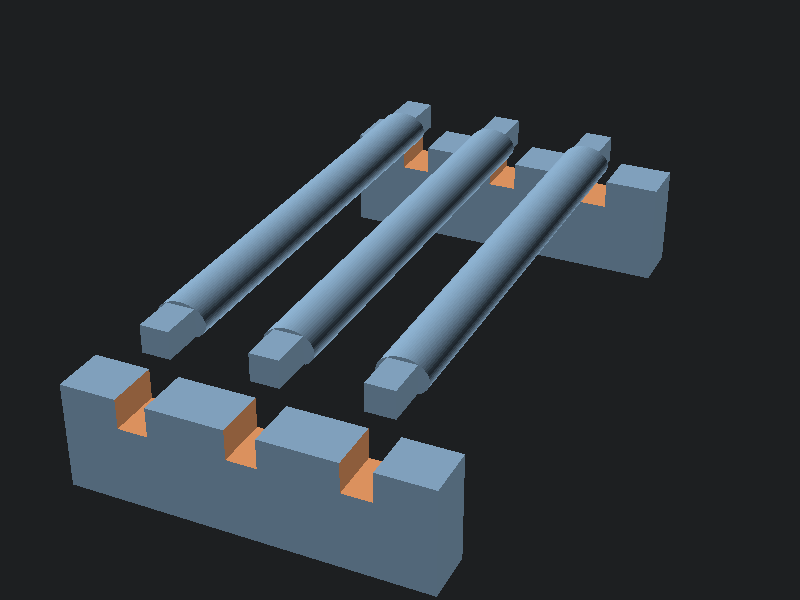
Print rib_rail.stl twice and rib_bar.stl three times. PLA, 3 perimeters, no supports; every part prints flat. Press the rib pegs into the open-top rail slots.
Geometry
Ribs are 14 mm wide with 16 mm intercostal gaps at a 30 mm pitch, sized so fingers can sweep over a rib edge and needles pass the intercostal space with room to teach "over the superior border of the rib" against the inferior-border neurovascular bundle.
Run it
- Assemble the frame and lay 15-20 mm of covering: upholstery foam for cheap repetitions, ballistic gelatin for ultrasound work, pork belly for tissue fidelity.
- For needle decompression, a catheter that reaches open air under the ribs is a confirmed "pleural" entry; one that stops in a rib or the covering is not.
- For finger thoracostomy, the gap accepts a gloved finger after blunt dissection through the covering.
Covering is the consumable; the frame survives indefinitely and disassembles flat for a kit bag.
Remix
rib_frame.scad parameters cover rib width, pitch, count, and rail size. Render with part="rail" or part="rib"; the default shows the assembled layout.